
August 2026 Reads
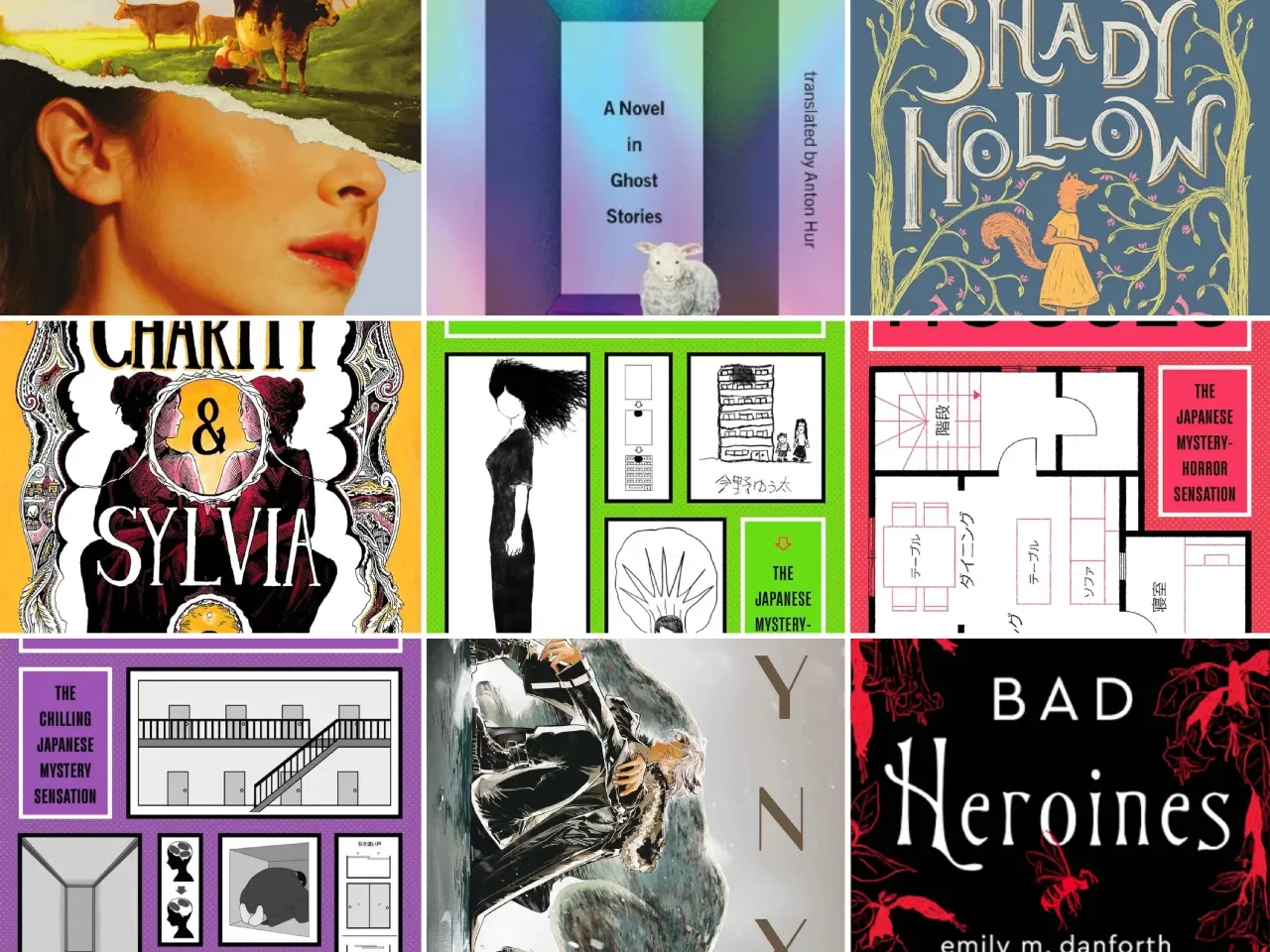
Getting this one in a little early, folks! I got back to my stride this August, which kind of surprises even me a little; as I had the final stretch of my previously mentioned cataloging course this month, and my partner’s band has had a ton going on as well, in preparation for their album release (tomorrow at the time of writing this!) Plus, we did in fact end up hiring someone new, and while they are acclimating to the store’s foibles fantastically, it’s still a training period, and that comes with its own bumps in the road. The fact I had time to read as much as I did surprises even me, but it helps that quite a few of the books I read this month were fairly quick, between their format and how addicted I was to reading them! Without further ado, here’s August.
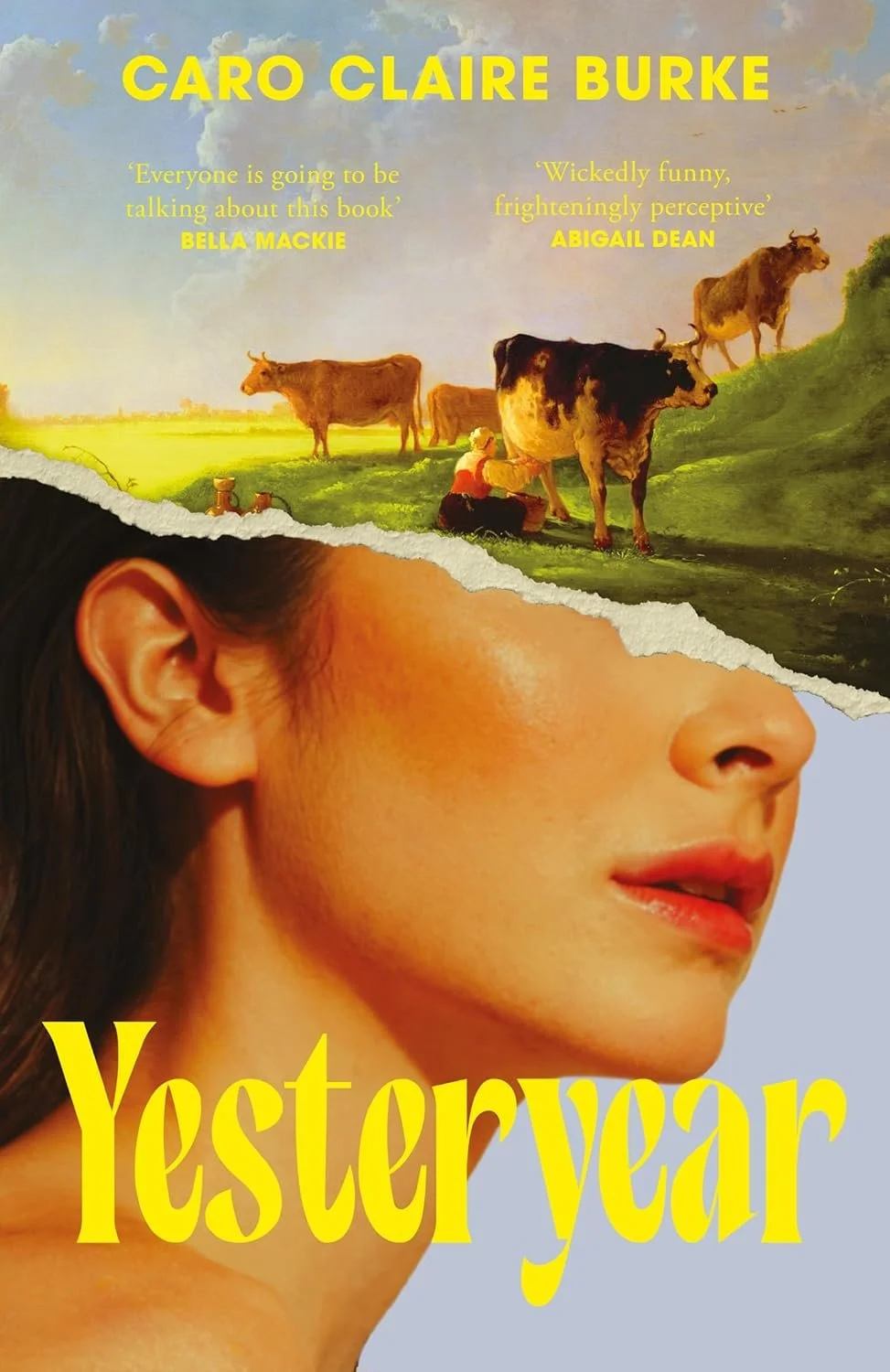
YESTERYEAR
Caro Claire Burke (2026)
This is a book I have seen posted around a lot, in “weird girl” lit spaces, and as such, I got some minor spoilers for this book before reading it. But even then, the main plot twist at the end of the book remained unspoiled for me, which was a pleasant surprise.
So all that to say, I have no qualms telling you that this book is the story of a tradwife social media influencer who awakens one day transported into the kind of traditional lifestyle she claims to espouse.
The voice of the narrator in this book is exactly the kind of mean-spirited I enjoy reading, with an example of my favorite being the nameless narrator from Natsuo Kirino’s Grotesque. Natalie, the narrator of Yesteryear, speaks in a tone that makes you feel like her blunt, unkind narration is giving you a kind of peek behind the veil of her perfect life and perfect persona, while deftly attempting to dodge the fact that she is inherently unreliable. Natalie is a mean girl, flat out — but her entire brand relies on that never getting out.
A sharp, tongue in cheek critique of modern day conservative talking points on everything from religion to gender roles, as well as a voyeuristic look at the life of a woman who would do anything to appear perfect, I found Yesteryear an addicting read. I do feel like the twist at the end felt a little….weak for me, in a way? But by the time the book wrapped up, I felt satisfied by it, and honestly, it was the only way the book could end and still remain grounded.
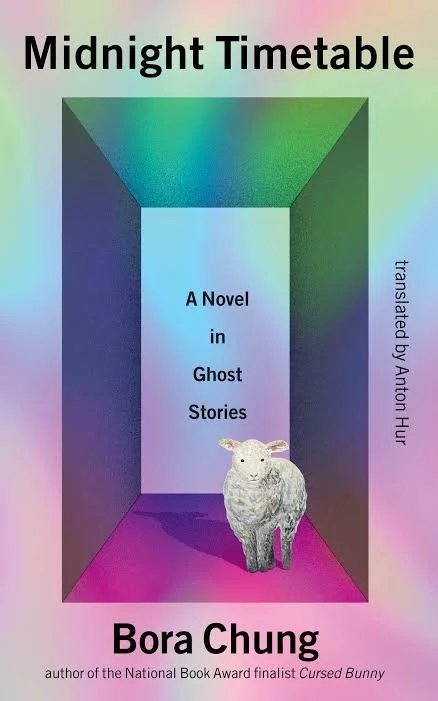
MIDNIGHT TIMETABLE: A NOVEL IN GHOST STORIES
Bora Chung (2023)
Midnight Timetable reminded me in some ways of other books I’ve read before; namely, Foreclosure Gothic and also works by Uketsu like Strange Pictures (hint for what’s coming below). While similar in that it is delivering a kind of larger narrative across a series of short stories, there’s something about the prose that feels more gentle in a way that I tend to associate with novels I have read that were translated from Korean.
All the stories in this novel revolve around people who have worked at a mysterious Institute, a home for cursed or haunted objects under study. Some folks are working there as a way to make ends meet, others seek to exploit the secrets inside for their own gain, but all experience something strange.
What does a missing shoe, a herd of sheep, an embroidered handkerchief, and an unremarkable man with a warning have in common? Or maybe, what don’t they have in common? The threads that string these mysterious objects and figures together form a larger picture, about just a few of the items that have ended up in the institution.
What causes a haunting? What can become haunted? And what happens when a haunting has run its course? This book offers up suggestions, but many things are left underexplained or open to interpretation. This didn’t make me feel unsatisfied; rather, I feel like the book only asks you to hear out the experiences of its characters, and whether you believe their experiences or not is up to you — they don’t care either way, they know what they saw.
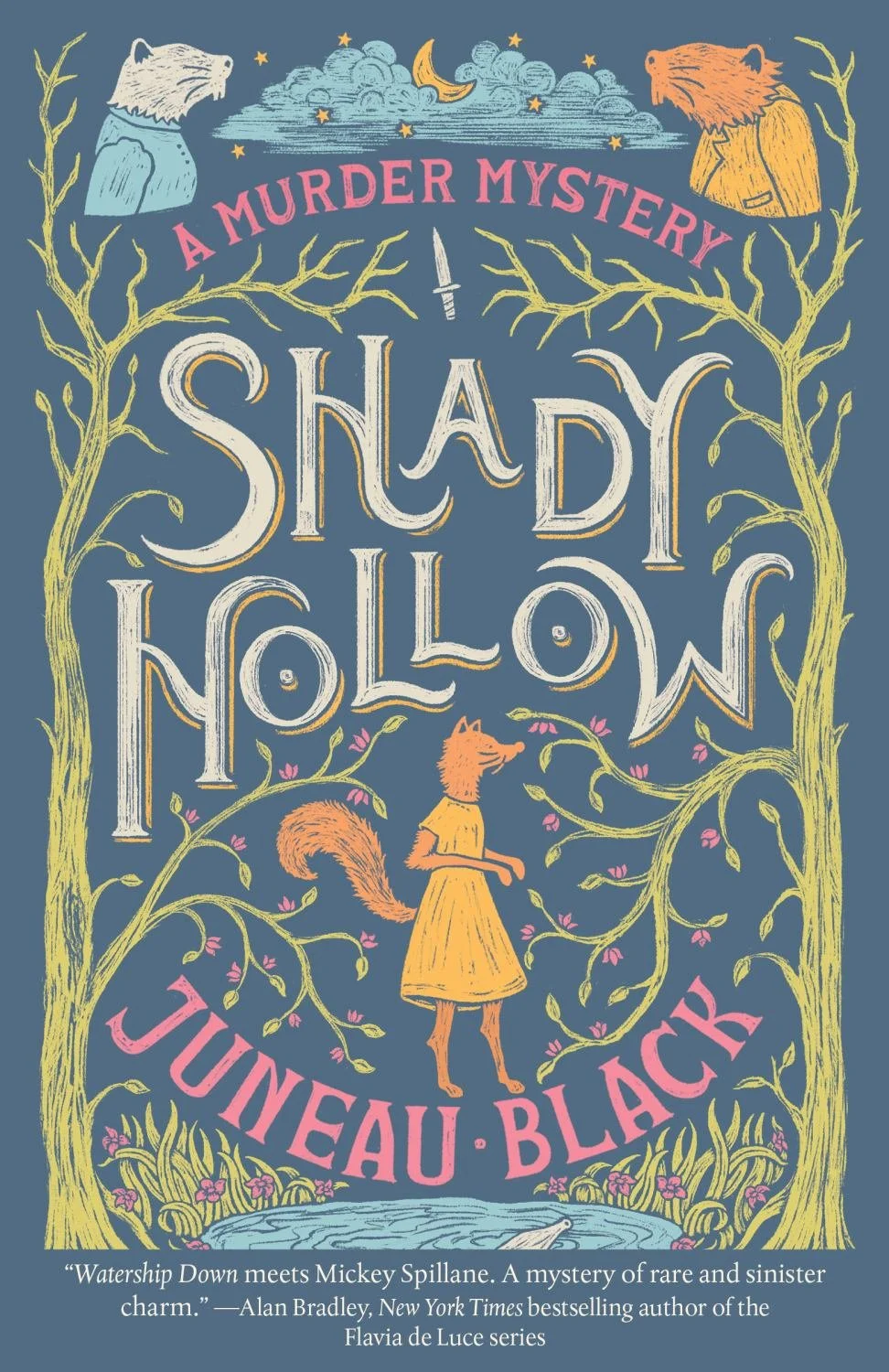
A SHADY HOLLOW MYSTERY SERIES
SHADY HOLLOW
Roy Marshall (2015)
I read this book once several years ago, seeing it recommended on the staff picks shelf at a local bookstore, and I came away from it with a rather harsh opinion.
I had recently been reading — and loving — the IDW comic series Beneath The Trees Where Nobody Sees by Patrick Horvath. I remember getting partway through Shady Hollow and telling my partner “this is just a tamer version of that (Beneath The Trees.)”
I think since my initial reading of this, I have come to better understand the concept and appeal of the “cozy mystery,” and wanted to give this book another shot.
Shady Hollow is somewhere between the Redwall books in cast, and a noir novel in tone, down to its reliance on character and plotline tropes. But I would argue that it’s wearing these influences on its sleeve, and isn’t really trying to do anything new and innovative.
If you want to read a murder mystery that takes place in a sleepy woodland town populated by various animal species, where you can almost certainly figure out what’s going to happen next or who the culprit is, and that sounds great to you for any various number of reasons (long work week, exhaustion with the late-stage Capitalist hellscape we find ourselves living in, you know, the usual) this is a suitable read.
There are more books in this series and I do find myself with a passing interest in checking them out someday, but it’s not something that’s a high priority for me at this time, if I’m honest!
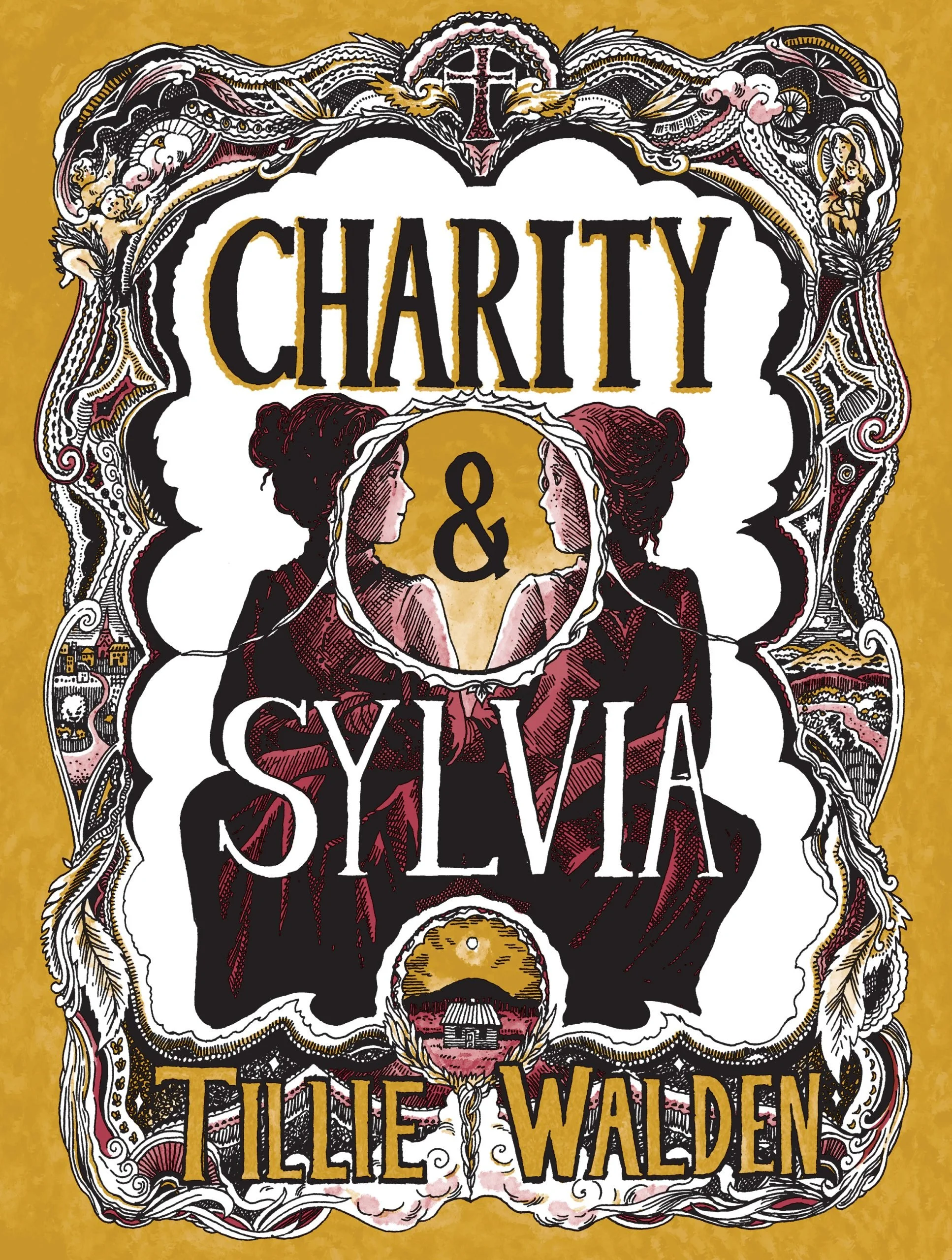
CHARITY & SYLVIA
Tillie Walden (2026)
I haven’t sat down with a solid graphic novel in a while, and was excited to pick up Charity & Sylvia not too long after its release. This gorgeous hardcover format book tells the true story of the lives of two women who lived in an out queer relationship in the early to mid 19th century, something that feels almost unthinkable to a modern audience.
As I love 19th century queer folks (especially queer women) myself, this book was right up my alley.
Charity & Sylvia is wonderfully researched, from the styles of dress characters are drawn wearing, to the depictions of various buildings. The two women’s characters shine through, and their tenderness and care for each other feels like a warm hug.
It came to my attention shortly after release that Rachel Hope Cleves, author of the book Charity and Sylvia: A Same-Sex Marriage in Early America,
took issue with this graphic novel shortly after release, claiming that Charity & Sylvia completely ripped off her book. The controversy around this release did bring about some interesting discussion about authorship and authenticity, which I do care about, and I’m frankly interested in reading Cleves’s novel now that I’m aware of it, but past that, I hope all the weird negative press doesn’t stop folks from checking out this heartwarming graphic novel.
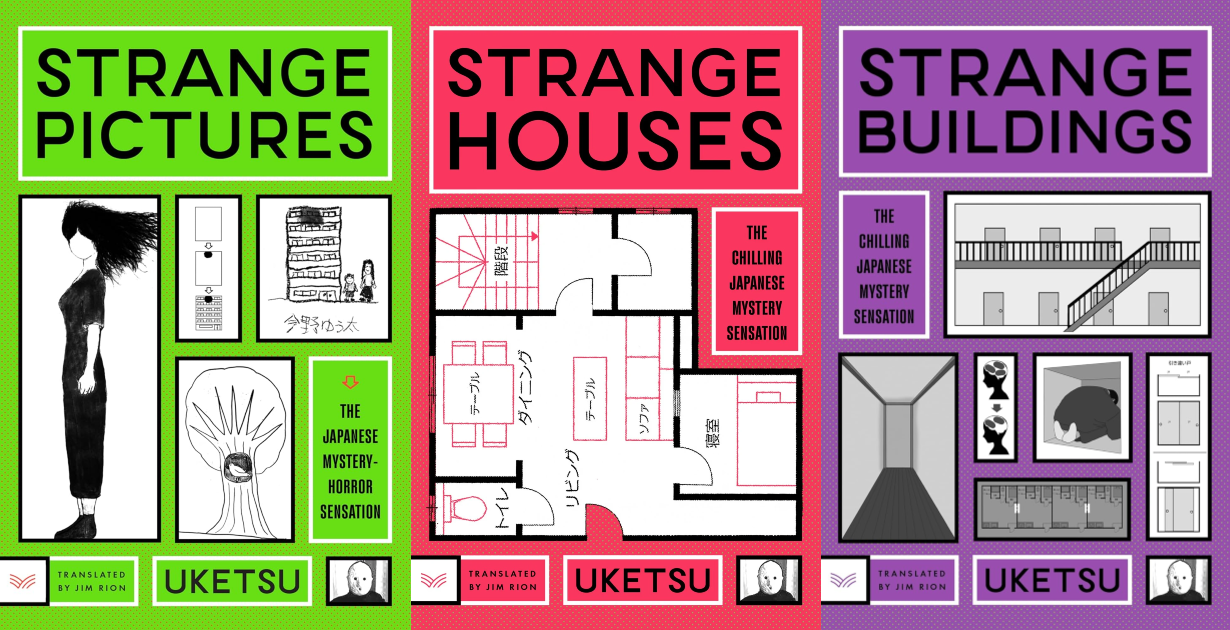
STRANGE PICTURES
STRANGE HOUSES
STRANGE BUILDINGS
Uketsu (2021-2023, 2025-2026)
Uketsu’s horror-mystery novels have been catching a lot of eyes in the States, since they first got translated and published in the US last year — and hard not to imagine why, with the neon green cover of Strange Houses, the first of the novels to be translated here in the West.
I had read Pictures and Houses before, but didn’t realize Strange Buildings was already out, and furthermore, that Strange Maps is on its way! This spurred me on to snag the newest book, and re-read the other two.
Of the three, Pictures is the most self-contained, with Buildings being something of a direct sequel to Houses. All three books comprise short stories that ultimately add up to one larger narrative, similar to the structure of Midnight Timetable above. I’m not educated enough to know if this is a popular trend in Asian fiction, or just a bias towards a specific style of writing that’s become popular to translate for Western audiences.
I do think that these follow a tradition of Japanese mystery stories that tend to operate almost like logic puzzles — the “whodunnit” element is comprised of a detective or journalist entering a situation, mysterious things happen, or they are presented with a rundown of a crime, and we the reader are meant to puzzle out what happened ourselves, except the final solution tends to be something extreme or outlandish or both, something that the average reader would have trouble picking out themselves. I see a lot of the criticism for Uketsu’s books here hinging on readers not really enjoying this kind of twist storytelling, and I can understand that — I used to be one of those folks. But at some point in my career as a reader, I learned to take these kind of traditional Japanese style mysteries and treat them as an exercise in being surprised at the creativity of the author, rather than a serious challenge to my intellect.
Of these three books, I found Strange Buildings to be the strongest, and my favorite so far. Having said what I just did, about how I’ve decided that it’s best to just take some Japanese mysteries for what they are and enjoy the ride, old habits die hard, especially if you’re a voracious reader of crime, mystery, and horror like me. This was the easiest to put together pieces of the puzzle, spread out across all the stories, while still getting the “there’s no way I could have guessed that!” moments at the end.
I think an underexplored part of these books is their central theming: Strange Pictures was, to me, about the horror of tying your identity to your past trauma in a way that, rather than healing from it, puts yourself and others in further danger, as well as the personal identity of being a parent. Strange Houses had, in my opinion, a less thoughtful mystery at its heart, but if I had to decide what I thought maybe a theme of the book was, it is generational trauma handed down through families, disguised as tradition and superstition. Buildings had a repeated theme of children trying to understand the thoughts and feelings of their parents — did my mother really love me? Could my father have been capable of brutal actions? And with some exceptions, the answer always seems to lie in a sense of melancholy disconnect between parent and child, a fundamental misunderstanding that we assume will likely go unresolved.
I’m really glad I revisited these and finally got to read Strange Buildings, these are fast, easy reads that have lots of twists and turns, if you don’t take them too seriously. Like I said before: just enjoy the ride!
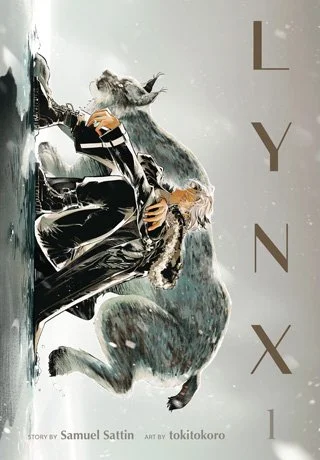
LYNX VOL 1
Samuel Sattin, tokitoro (2026)
I remember spotting this manga while browsing through our shop catalogs, and the cover art and description were both striking. Now that I’ve had time to sit down with this first volume, I would say it definitely holds some promise, but I’m not sure I’ll be sticking around for later volumes.
After an unspecified climate disaster, detective Lynx Takuma lives in one of the last habitable cities, a cold, advanced technological world, where dangerous drugs and bio-enhancements are bought and sold by tech companies and the streets alike.
Lynx has numbed herself after the death of her wife, Simone, and struggles to connect with her peers, and especially with her adopted child, Boro, who is struggling with typical adolescent issues. Thankfully, she has her upgraded cat, Skua, and troublemaking alcoholic partner Task to help ground her in the world around her.
A bizarre, gruesome crime scene appears, and during the autopsy, a lone feather is found lodged in the brain of the victim — a feather that didn’t appear on scanners, and that Skua has a particularly strong response to. This would be troubling enough on its own — but near the crime scene, Lynx saw something she can’t believe: an angel. What did Lynx see? Is this a new kind of bio-upgrade? Or something supernatural?
One thing I found interesting about this manga is that it is illustrated by tokitoro, who I know mostly from their work on variant covers for Marvel and DC. They pull off some really interesting character and monster (spoilers?) designs for this series, but a lot of the action work was a little sketchy and made events a little hard to follow. I’m not familiar with the writer, but a lot of this felt a little bit like reading manga that used to be translated in the 90s/early 00s; there is a level of….loveable cringe here, that feels nostalgic for me. I also find that there are shades of Evangelion here, nothing that is a direct one-to-one, but when you get angels involved, and you see at least one of the upgraded characters, it’s hard not to think of Eva at least a little.
I think overall, Lynx would almost be better suited to a moody, limited run anime series or film than it is to a manga, at this stage, but it does feel like something made with love.
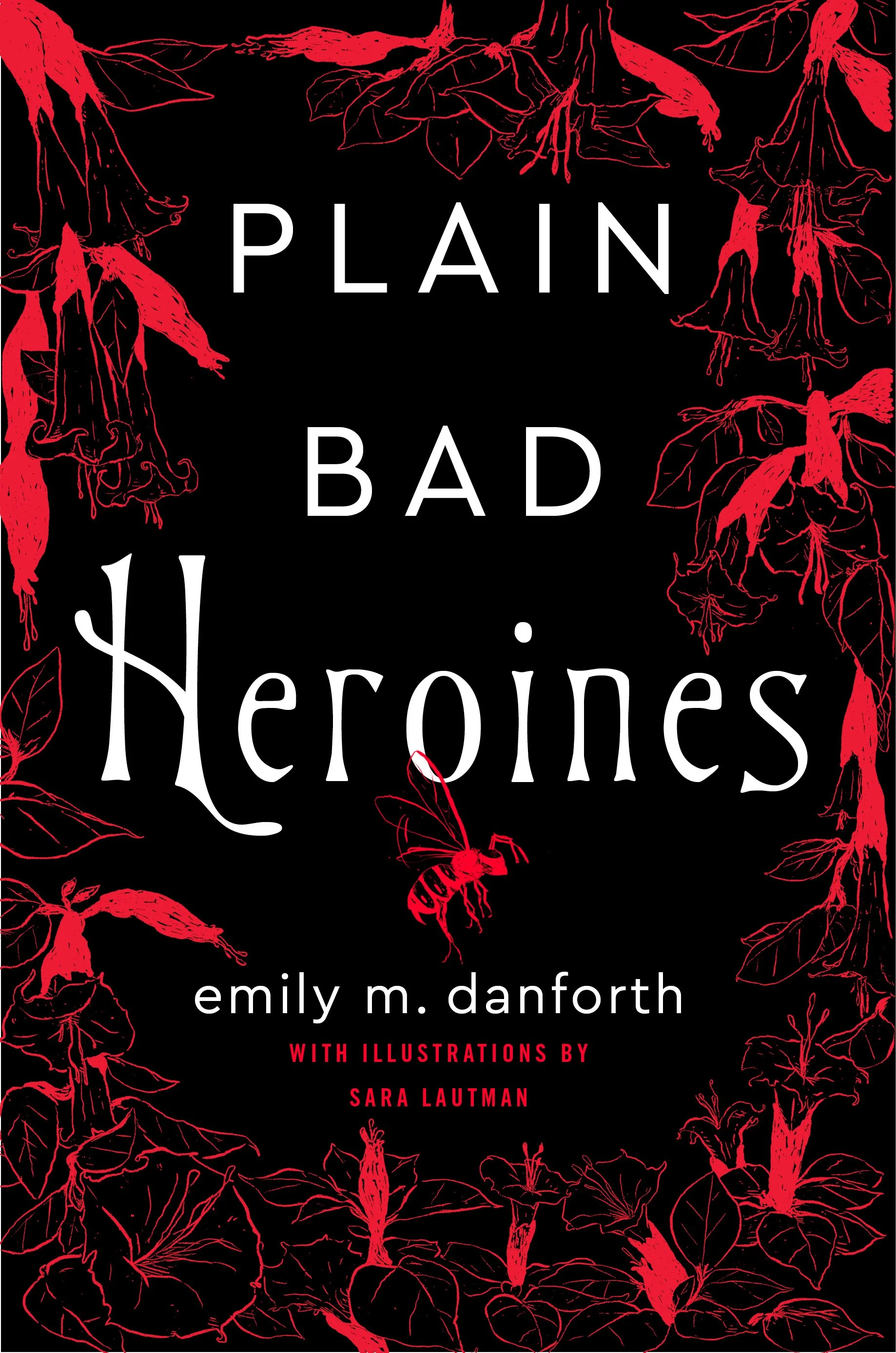
PLAIN BAD HEROINES
emily m. danforth (2020)
I feel like I am going to struggle to write about this book, because I love it so much, dear readers.
I think I picked this book up in the late winter, early spring of 2021, when a few local businesses had partially opened up, and I swung into a nearby bookstore. Something about this book called to me off the shelf, and I bought it on impulse.
When I tell you I devoured this book, all 640 pages of it, I mean it. This was one of those books that, the second I finished reading it, I was immediately ready to start it over again, because I was dying to return to the world and the characters, and I have kind of felt that way ever since. I feel the urge to reread it often, and I will often make myself wait until what feels like an undefined “reasonable amount of time” has passed before I am “allowed” to pick it back up again — I’m afraid of burning it out like a song on repeat, and this book is too good to do that.
How to describe Plain Bad Heroines? It’s a book about a movie being made, about a cursed (?) girls’ school and the events that took place there in the early 1900s, revolving around another book. It’s a little horror, a little comedy, a little mystery, and a lot queer.
Our two narratives are as follows: In the present day (2014 actually) three young women are thrown together during the production of the film The Happenings At Brookhaunts; two of them, Audrey and Harper, play the lead characters, while the third woman, Merritt, wrote the book the film is being based on. Their individual characters and that character chemistry drives the book forward, while the “happenings” around them create tension throughout.
Simultaneously, our narrator shares with us the true events of what REALLY happened at Brookhaunts School for Girls in 1902, and how much of it has been lost to history.
I love this book. I could say more, I could talk about this book all day, but I won’t, in the hopes that maybe, just maybe, you’ll try this book out to experience it for yourself like I did. I keep recommending this book to my friends but so far none of them have read it, so I feel like I’m in my own little Plain Bad Heroines Society of One.
—M.