
April 2026 Reads
April was another tough month for me. After the chaos of March, I had a couple of weeks to catch my breath a bit, before throwing myself into various work and non-work related events. I helped plan a Celebration of Life event for a friend, organized our store’s participation in the local Independent Bookstore Day bookstore crawl, and I also organized our third year (!) participating in a Free Comic Book Day at the Capitol event, with Free Comic Book Day, our biggest day of the year, looming on the immediate horizon. I can’t believe I found as much time to read as I did! But I credit some of that to the absolute BANGERS I picked up this month, that I couldn’t put down!
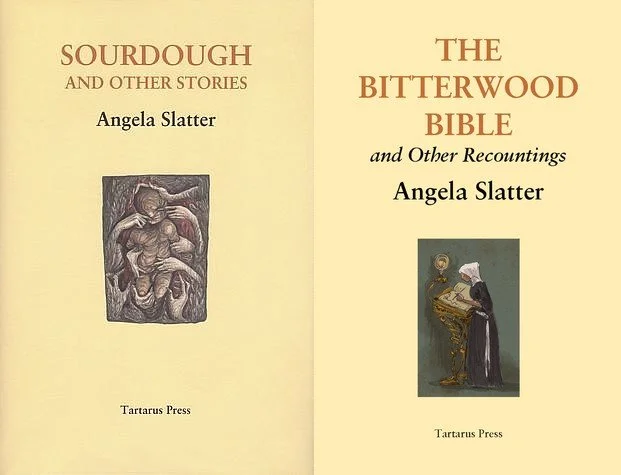
THE SOURDOUGH CYCLE
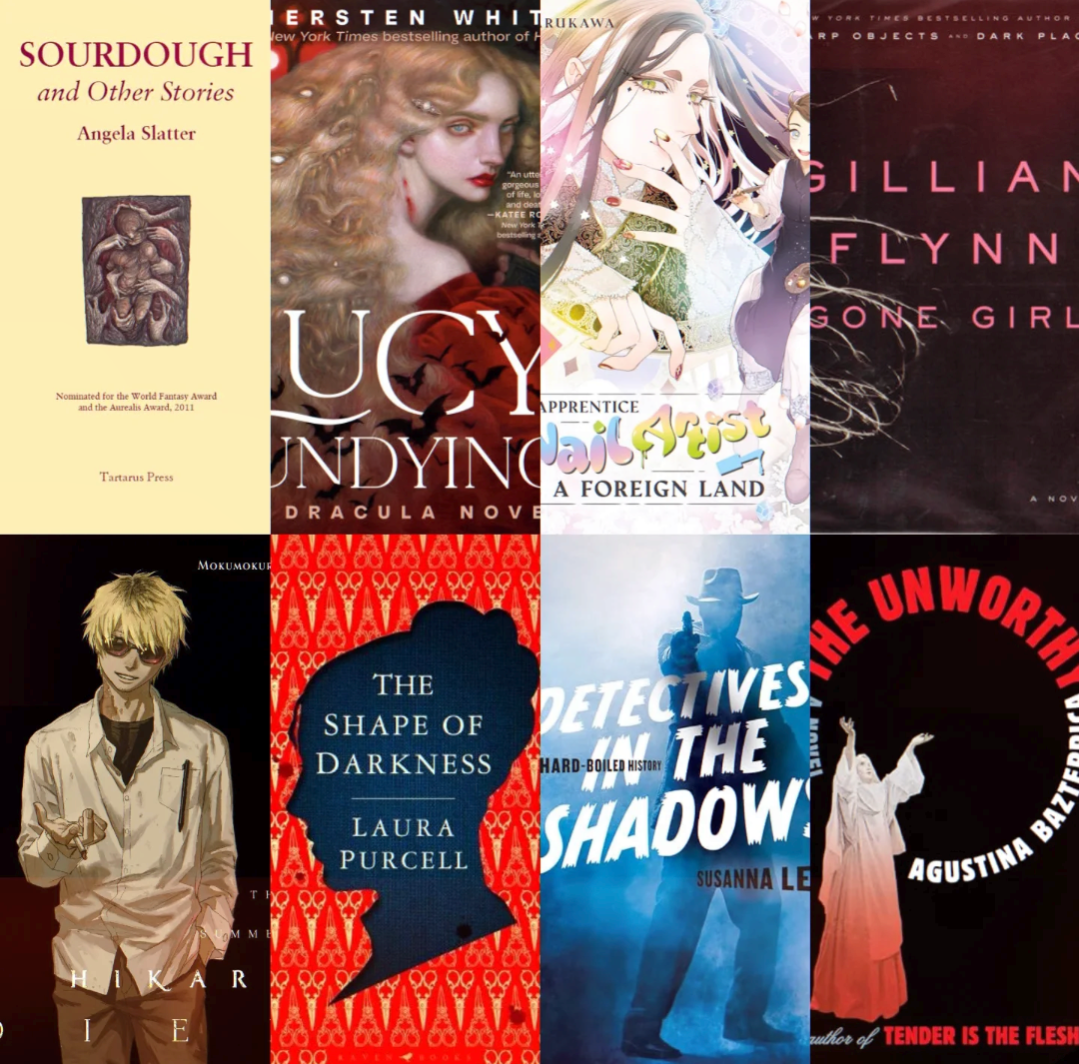
SOURDOUGH AND OTHER STORIES
✦︎
THE BITTERWOOD BIBLE AND OTHER RECOUNTINGS
Angela Slatter, (2010, 2014)
I found these books by going down a short rabbit hole, after seeing a solicit at work for an upcoming title with a name and cover that appealed to me. Googling the title and author alerted me to the existence of this entire world of short stories and novellas that exist within what is referred to as “The Sourdough Universe” or “Sourdough Cycle”, created by Angela Slatter, and I have to say, these are a new obsession for me.
I decided to jump into this universe by going through the books in publication order, and so I began with these first two short story collections, and I have to say, these are both masterpieces that had me hooked right away.
Both tell one story, over years, from various narrative viewpoints, held together with the connective tissue of repeated characters and locations, and as the stories continue throughout the book, the larger narrative they form takes shape. Watching all the threads come together feels both thrilling and satisfying, at least to me. At the same time, though, these are all individual, independent stories that stand alone on their own perfectly.
These are not quite reworkings of fairy tales, although some tropes and names the average person might be familiar with are present. These feel like an entirely new pantheon of characters, a great wide world that’s waiting to be explored. These are fairy tales, but they’re their own, and they’re as dark as the Brothers Grimm, if not darker — some of these stories definitely walk the line towards horror.
These short stories are filled with women - powerful women, strong women, weak women. Women shaped by their circumstances, the world they live in, the choices they make. I can’t gush about these books enough, and if you don’t read any other book by Angela Slatter, PLEASE give Sourdough and Other Stories a try.
THE SOURDOUGH CYCLE
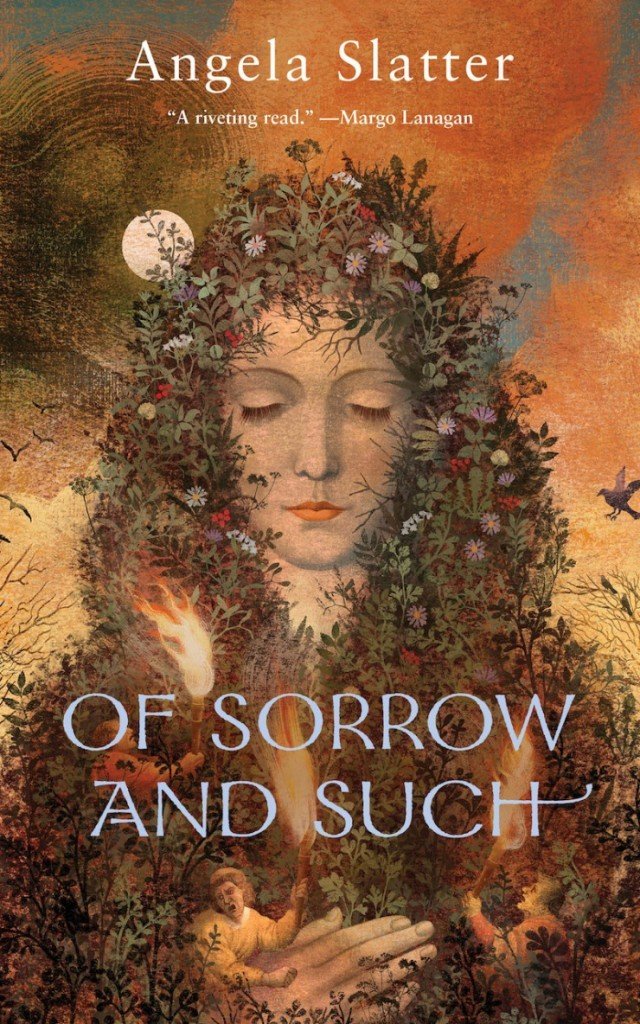
OF SORROW AND SUCH
Angela Slatter, (2015)
Of Sorrow And Such is the first novella spinning out of the two short story collections above, specifically Sourdough and Other Stories. In Sourdough, we meet our main character Patience as a young adult, and towards the end of the book, she appears in a short story as an older woman. This novella takes place in between those years.
Patience is what others would call a witch, and for any woman, a witch is a dangerous thing to be. Biding her time quietly as a village wise woman harming no one, when two young women in the village make a foolish mistake, they come to Patience for help, creating a chain of events putting her and everyone involved in danger.
It was really cool to see not just Patience, but another character from Sourdough, Selke, at another point in their lives. The small town the book takes place in feels like many others in Slatter’s first two books, or indeed in many fairy tales, but in Slatter’s established fashion, she manages to spin local wiles and intrigues worthy of any village gossip into the background plot of the story, adding to the meat of the world.
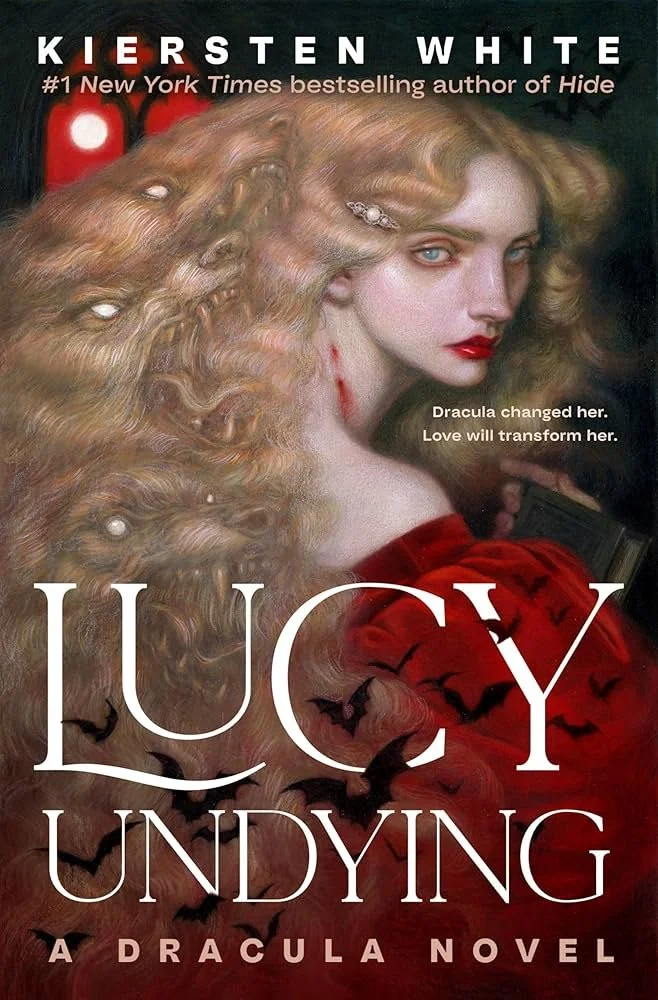
LUCY UNDYING
Kiersten White (2024)
I deeply regret to inform you that I did not care for this book. The outstanding cover art is what initially caught my eye, and the concept of a sapphic vampire story held my attention, but I have to say: the cover art is about the only thing I enjoyed.
I think there were some interesting ideas in here, about learning to love yourself for you, and not living for the affection of someone else; and about the ways women’s lives and trauma crystallize into the person they are, and how they can embrace and/or overcome that trauma. However, it really felt like the book was hitting me over the head with every one of its themes.
There are two main characters narrating the story through three main points of view: Our modern day heroine, Iris; Lucy Westenra of 1890, told through diary entries, and present day Lucy recounting her life since becoming a vampire in audio recordings to her therapist.
Iris, is….to me, deeply unlikeable. I think the author really tried to make her a relatable and appealing character, but it just comes across as way too try-hard. I genuinely feel bad making the criticism I am about to make, as this is a term frequently used to demean female writers, but Iris feels like….a Mary-Sue, and not even in a fun way. I read another reviewer’s critiques of this book and they compared Iris to a Tumblr user and as a former avid Tumblr user myself, frankly I feel like that hits the nail on the head.
As for Lucy’s sections, they feel like they are coming from two different people. I think this is intentional, because the Lucy who has lived over a century SHOULD sound like a different person that the sheltered young girl of the late Victorian era but this feels like a COMPLETELY different character. Maybe it’s just me, but I struggled to find the lovesick teenage girl in the later Lucy, who almost feels like the Forrest Gump of the vampire world, coincidentally showing up at important moments in history, like the signing of the Treaty of Versailles.
Maybe it’s partly on me, because I expected something more gothic in nature based on the book description (something something “never judge a book by its cover”) but everything culminated in this being a real slog for me to get through. Thankfully I found it in a little free library, and I will return it there, and maybe it will find a home with someone who will absolutely love it.
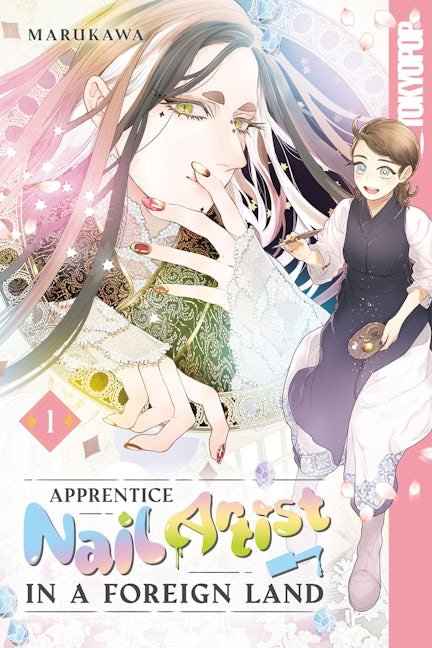
APPRENTICE NAIL ARTIST IN A FOREIGN LAND
Marukawa (2022, 2026)
This is an isekai manga (a subgenre of manga where a character gets pulled into a fantasy setting, generally) following a young office worker who is transported to the fantasy world of Nif, where nail art can be used as a conduit for magic. While being a nail art hobbyest in her previous life, Sahara Keiko (known as Saara in Nif) has been apprenticed to a nail art master who specializes in just such a type of magic. Saara loves translating her cute and colorful nail designs from our world’s modern day onto clients’ fingers, but her magic skills are nearly nonexistent, and the materials she has at hand often lead to less than desirable magic results using these styles and techniques. Therefore, Saara decides to become the best fashion-design nail artist in Nif, and learn all about nail art and magic!
Populated by a loveable cast of characters including the eccentric, noble wizard Rocco, his apprentice Hoh, and the nail artist Saara is apprenticed to, the old-fashioned goblin Reed, Apprentice Nail Artist in a Foreign Land is a fun read. I’m interested in the mechanics of the world and learning more about the magic and nail art itself, but also there wasn’t a particularly compelling “hook” by the end of the volume either, which led to it feeling a bit slow at times.
I’ve never been super into the isekai subgenre of manga, but I found the premise of nail art mixed with magic to be a unique one, and enjoyed my time with this book.
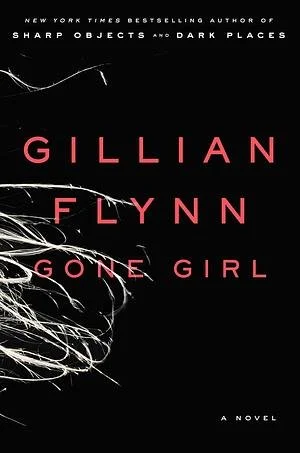
GONE GIRL
Gillian Flynn (2012)
I’ve been avoiding Gone Girl for years. Not because I expected it to be bad, exactly; just that a lot of books that gain intense popularity tend to let me down when I finally do read them. However, having finished the book, I DO understand the hype.
Flynn has said that “Marriage is sort of like a long con, because you put on display your very best self during courtship, yet at the same time the person you marry is supposed to love you warts and all. But your spouse never sees those warts really until you get deeper into the marriage and let yourself unwind a bit.”
As a married person myself, this book took me on a roller coaster, and made me incredibly grateful for my partner and the relationship we do have, despite our individual faults, or bumps we’ve experienced along the way. It’s kind of interesting because when we started dating, we intentionally aired as much of our dirty laundry and confessed our worst habits right away, and I’ve always felt like we’re better for it, but I know that is probably not the norm. This book explores two flawed (DEEPLY flawed) people who have an intense hate-love relationship (in that order).
I did feel like this book ran a bit…overly long at times? I wouldn’t say it’s poorly paced, and everything feels necessary and intentional, and I DID find myself not wanting to put it down. However, there were points where I found myself quietly wishing we could move the plot along from time to time.
One of my best friends has also recommended Sharp Objects by Flynn, and after having tried Gone Girl, I’m inclined to give it a read sooner rather than later.
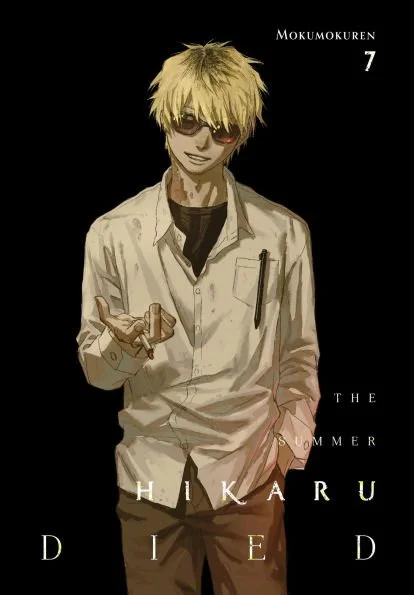
THE SUMMER HIKARU DIED VOLUME 7
Momokuruen (2025, 2026)
This latest installment of The Summer Hikaru Died is perhaps the most action packed yet. We follow “Hikaru” and Yoshiki as they attempt to close one of they mysterious holes allowing aberrations into their town, while the enigmatic Tanaka and our protagonists’ schoolmate Asako attempt to do the same using their own methods. Upon learning that closing a hole will lead to almost certain death, “Hikaru” attempts to go through the hole and try to close it, relying on his bizarre nature to keep him whole, and his connection to Yoshiki to guide him back to safety. At a different location, Tanaka and Asako use their respective gifts and persuasion to attempt to convince an impurity to close one of the holes for them — but negotiating with an impurity proves just as dangerous as entering a hole itself!
This is perhaps the most action packed volume of The Summer Hikaru Died yet; where other volumes have dug deep into character building or fleshing out the wider mysteries of the world, this installment is committed to keeping the suspense going through conflict.
While in many ways I find my tastes run opposite to the more action oriented shonen (boys/young male oriented) manga that tends to garner the most popularity in the states, the heightened stakes and daring scenes portrayed in this volume reminded me that I am in fact NOT immune to a good fight scene from time to time.
A note from the author at the back of this volume mentions that the series is planned to end around volume 10, so I expect from this point forward we’ll see more big things happening as we reach the climax; I’m torn between being excited to see what happens next, and knowing that it’ll be over soon, the great fan dilemma.
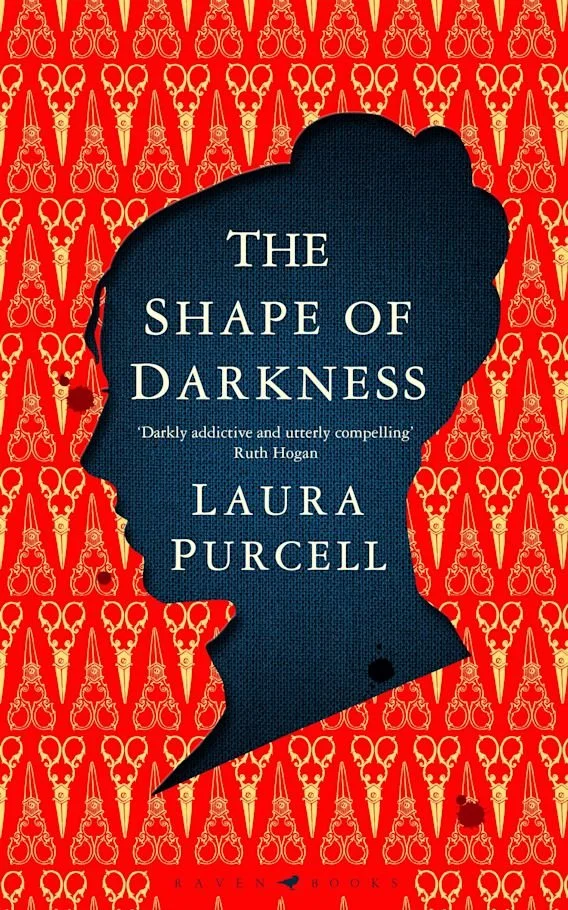
THE SHAPE OF DARKNESS
Laura Purcell (2021)
This is the second book by Laura Purcell that I’ve read; previously I had read The Silent Companions and adored it.
I liked The Shape of Darkness but I didn’t love it. At least, not the way I did Silent Companions.
This book has a lot of my favorite things in it — dreary Victorian era setting, an unreliable narrator, discussions of Spiritualism and the paranormal. And I also quite enjoyed its meditations on the relationships between sisters, from both of our narrators: Agnes Darken and her deceased sister Constance; and then a young albino woman named Pearl and her older sister half-sister Myrtle.
I think genuinely my greatest frustration with this book is that our two narrators, Pearl and Agnes, feel less complex and interesting than said sisters themselves; women we’re constantly told are unstable, unkind, self-serving and at times cruel. We don’t get to know Constance as much as we do Myrtle, as Constance is deceased before the events of the book start, and therefore never is able to speak for herself, but Myrtle delivers a few heartfelt moments that make me feel for her. Ultimately, I see Myrtle as a child with an unfair amount of responsibility thrust upon her, and I genuinely felt pity for her. That pity felt quite misplaced when we get to the end of the novel and —SPOILER ALERT— she is seemingly responsible for some truly heinous deeds. Am I supposed to feel something for Myrtle, or not? Is she supposed to a complete psychopath after all, and that’s the twist? If so, I don’t really feel like it was earned.
Pearl and Agnes both feel a little frustratingly weak and wishy washy. I know it’s probably not fair to say that, given that they’re also operating under their own impossibly challenging positions, during a very different time. But I’m just….not as interested in them. I think maybe if we’d spent slightly more time with Constance or Myrtle, maybe my feelings about Pearl and Agnes might shift, but I’m willing to admit that maybe this perception is purely a personal thing.
This was a nice atmospheric read, and would be well suited to curling up with a nice cup of tea in November, but ultimately, The Silent Companion is my favorite of the two.
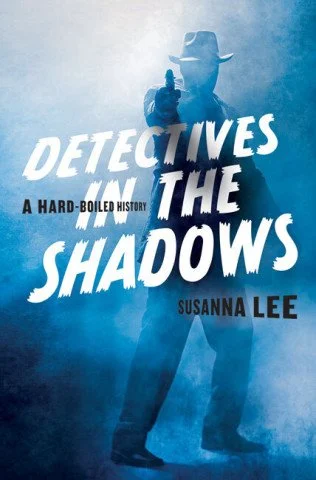
DETECTIVES IN THE SHADOWS: A HARD-BOILED HISTORY
Susanna Lee (2020)
I went through two real “noir” phases in my life; in high school and then again in college; I was fascinated by the narrative conventions of the hard-boiled detective, both in literature and film, and more than once threw myself into collections of Raymond Chandler and Dashiell Hammett stories. However, for various reasons, I’d always lose steam and set the interest aside for another genre.
This book was a very cool history of the hard-boiled detective as a conceptand some of its most key players over the last one hundred years, both important characters and the writers that shaped them. It contextualizes each one in the era it was created, and how it reflects the world around it. The thesis of how the “hard boiled” detective has evolved over time to fit into the times it exists in, while still maintaining certain characteristics (often ones that walk a fine line between contradictions) was explained in a clear and entertaining form. While this is a nonfiction book from a university press, it’s certainly not dry.
I’d definitely recommend this to other folks who are seduced by the cigarette smoke and the silhouette under a lone streetlight, and want a greater understanding of the roots of the archetype in American history.
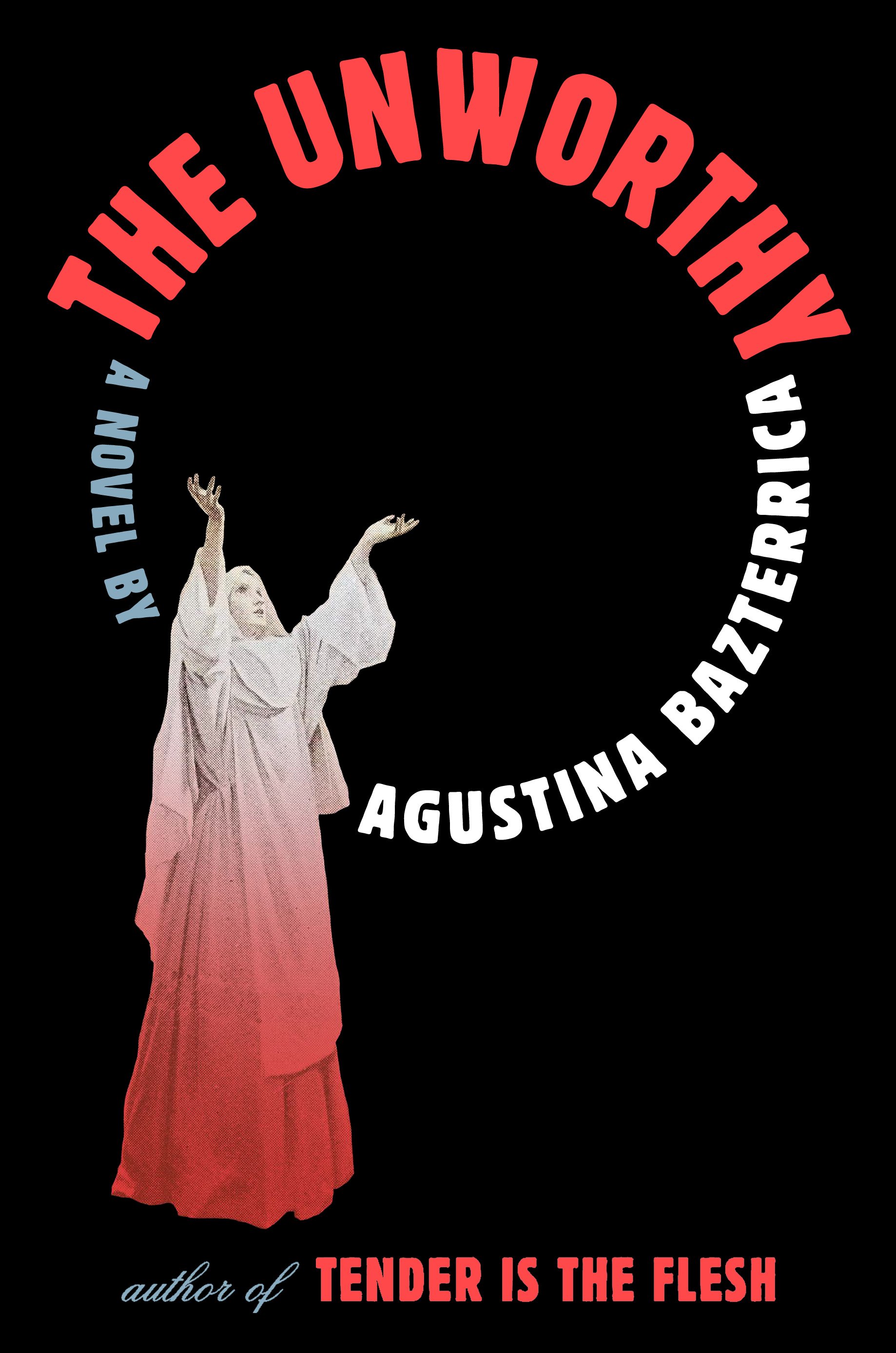
THE UNWORTHY
AGUSTINA BAZTERRICA
I read Tender Is The Flesh, Bazterrica’s other translated novel, last year. Like many other folks, I found the ending shocking and deeply unsettling. It’s a book that I’m glad I read, but I honestly don’t see myself returning to anytime soon.
The Unworthy, while shocking and disturbing in its own right, had a sort of dreamlike quality to it, in the way it mixes beautiful descriptive imagery with absolutely savage displays of brutality. There’s a meme that goes around every once in a while, to the effect of “I’m not Catholic but the imagery of Catholicism goes HARD” and as an outsider to that, I get a lot of that vibe here. That kind of writing is right up my alley, so despite my sense of unease, I found myself unable to put this book down, and in fact, can see myself re-reading it over and over again.
There’s something so superbly cruel about this novel; from the women themselves to the world they exist in, as this book takes place in a not-too-distant future, after a climate catastrophe of some kind. The setting alone should put this book solidly in the “sci-fi horror” category, but the way it is written makes it feel more like a dark fairy tale, to me.
Secluded in a monastery, a group of women form a sect called The Sacred Sisterhood. Within these walls, they find refuge, as long as they conform to the heavy demands of the Sister Superior and “Him”, the leader of their cult. The atmosphere is toxic, with women encouraged to sabotage each other or perform grueling sacrifices, in order to move up the ranks of the cult with the goal of eventually becoming “Enlightened.” Advancing requires various kinds of mutilation such as having your tongue removed or your eyes sewn shut.
Our narrator belongs to the lowest rank outside of being a servant, “unworthy.” Even though she seems to understand there’s something not quite right about existence within the Sisterhood, she still willingly participates in this oppressive society, until a new woman enters their walls.
The religious horror is strong here; as someone who was raised in a Southern Baptist home, although this type of religious horror is very different from the “fire and brimstone, repent” type I grew up with. As with Tender Is The Flesh, the feminist themes are front and center, without beating you over the head with it (like some other books on this list I could name.) I enjoyed this book even more than Tender, and I look forward to returning to it again.
Thanks for reading, and happy May! At the time of writing this, Free Comic Book Day is tomorrow, so I’m summoning one last burst of frantic energy to push me through, and then I look forward to taking some time to myself to recover. I already have my next book lined up, and I’m so ready!
—M.