
February 2026 Reads
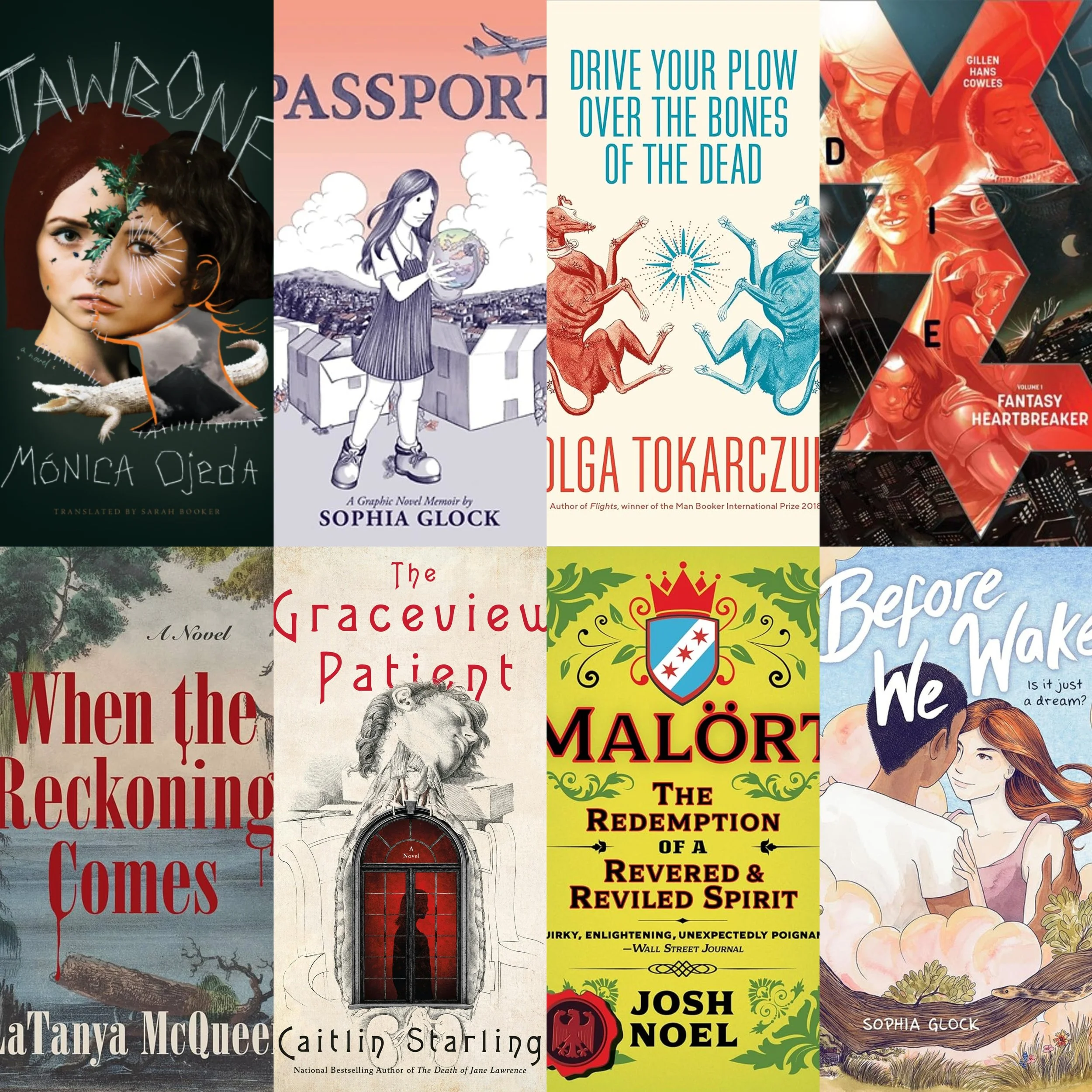
February has been a challenging month. It’s short, and, at least for me, somehow it never feels like there’s enough time to get everything done. Between extended cold weather from January, Valentine’s Day, working on a Celebration of Life for a friend, and preparing for a signing at the end of the month, not to mention standard work tasks like getting in monthly initial orders which always feels like it’s sapping my very last brain cell, it somehow felt like I barely had time to read anything at all. Looking back at what I did read, somehow I got through more than I realized.
I think this month I managed to encounter some new all-time favorites, and tried some titles from authors I’m already familiar with (in one case, completely by accident!)
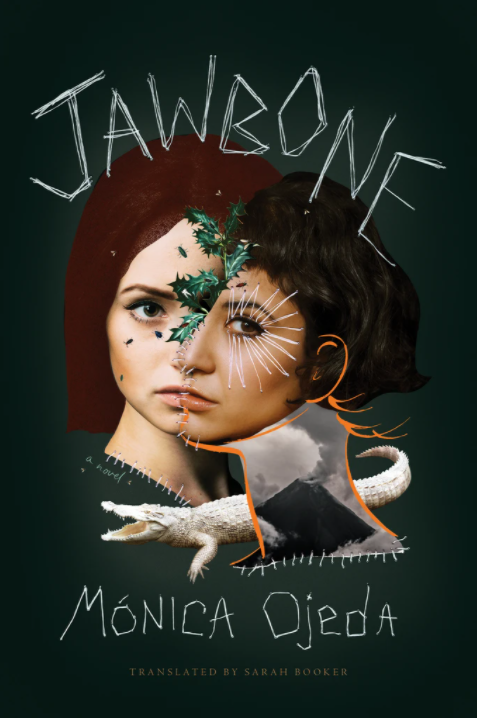
JAWBONE
Mónica Ojeda (2017; 2022)
The first few chapters of this book were a challenging read; it pulls no punches with its prose. Like the main character in the first chapter, who finds herself bound and trapped in a remote cabin, you're left disoriented, frustrated, and struggling to grasp what's going on around you. However, once I adjusted to the narrative styles chosen by the author and translator, I found this novel incredibly compelling. Parts of it read like spoken dialogue (every time I read the italicized, hypenated “high-school-for-girls” it was impossible for me to not whisper it in one breath), bringing the voices and personalities of narrators into focus for the reader, even when that character's own focus (or lack thereof) is occasionally difficult to follow.
One thing I found fascinating about this book is its obsession with the liminal; online we hear and read a lot about liminal spaces, especially in online horror spheres, and while this book does involve its own liminal space in the form of an abandoned building, it's really more about a liminal STATE, a liminal time in one's life – specifically that of the teenage girl, or as it is often referred to in the book, “the White Age.” This liminality is often characterized by the color white, typically known to express a kind of purity – however, Jawbone focuses on the flip side of that: what is pure is constantly on the cusp of corruption. I think it's especially interesting given that the characters in the book and presumably the author herself is well-versed in internet horror culture, but liminal spaces as a horror concept don't really make an appearance here, compared to classic creepypastas like Jeff the Killer and phenomena like Slenderman.
Another key part of this book is its spotlight on the relationship between mothers and daughters. All the major characters in this book have a strained relationship with their mothers, often through abuse and neglect, but also often reflected in bizarre, unnerving love. A quote early in the book stuck out to me, and was often repeated in one form or another throughout – “everyone engenders their murderers, she thought, but only women give birth to them.” The cycle of daughters replacing their mothers, then becoming mothers themselves only to later be devoured and replaced as they grow old, for me brought to mind the “maiden-mother-crone” archetypes of womanhood, except if that was generally perceived as a negative rather than a neutral-to-positive fact of life. I think this also often extends to a larger inability to communicate across ages and generations in general.
Finally, the relationship between two of the main characters, teen girls Annalise and Fernanda, is riveting. Their friendship goes beyond friendship, perhaps beyond romantic love, for better or (often) for worse. A certain toxic part of it appealed to me, I can't lie. The feeling of closeness akin to desire; desire to the point of obsession, almost literally all-consuming, is a dynamic I find endlessly fascinating in fiction (see last month’s Wuthering Heights.) The sexual nature of their obsession borders into violence, but at the same time, the internalized homophobia present in the catholic school society the girls live in is present nearly every time this is brought up, which makes me feel pity for them. I find the two of them especially embody a kind of “spectrum of girlhood” — they enjoy hair, makeup, fashion, and boys, just as much as they do internet ARGs, horror, and the occult. That complexity in them is something I can relate to a lot from my own teen years, and even now as an adult, although of course they take these interests to horrifying extremes.
Obviously I had a lot to say about this book, and I haven't even scratched the surface; I didn't even include a summary or recap here, because I wouldn't even know where to begin. After finishing it, I desperately needed to see what others thought about this book – I had seen it recommended many times, hence why I had read it – but after a quick Google, I found a handful of reddit threads that mostly slammed it for being pretentious and extreme for the sake of it, which I frankly can't agree with. Jawbone is gonna stick with me for a while.
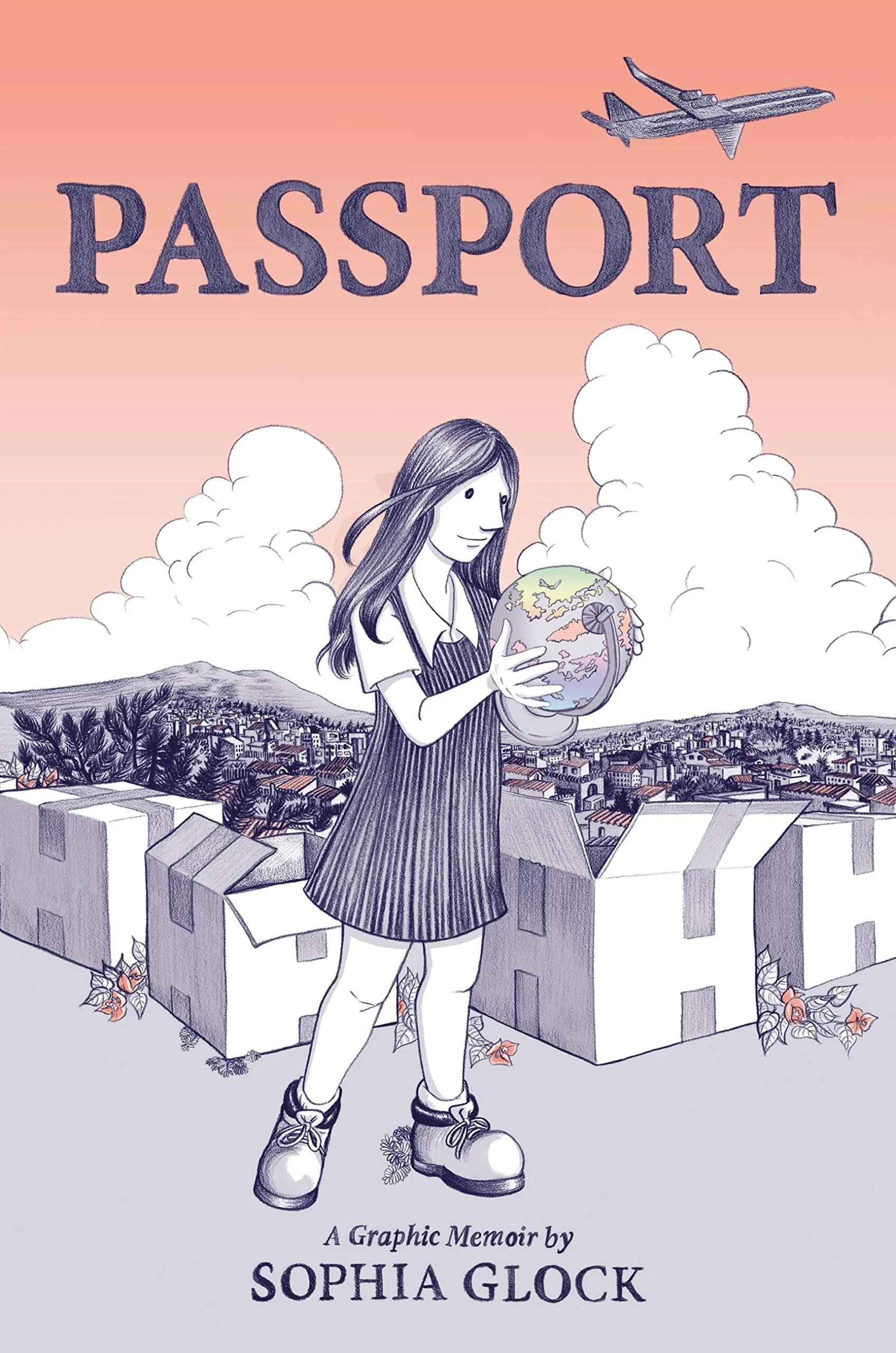
PASSPORT
Sophia Glock (2021)
I read this book in preparation for a signing we would be having with the author/artist at the end of the month; the signing was for her newest book, Before We Wake, but this was her first graphic novel. It tells the story of Sophia during her teen years, attending school in Central America. The blurb on the back of the book posits the central narrative being around discovering the big secret her parents have been hiding from her: that her life has been constantly uprooted since childhood because they’re intelligence officers in the CIA. This was a very eye-opening premise, and putting myself in Sophia’s shoes was definitely a fascinating look into her very specific upbringing, and of what that kind of secrecy does to a child’s life, and a family dynamic.
For me, however, I found the narratives around Sophia’s best friend Beth the most interesting parts of the book. Friendships and relationships are complicated at any age, but especially so in your teen years. Reading this while I was in the middle of Jawbone felt like an appropriate, if much less visceral, companion piece — the relationships between young women can be volatile, needy, breathless, and heartbreaking. I’m still thankfully good friends with many of the people I grew up with, but I could see shades of the complicated friendships and feelings I had at that age reflected here, and to me, those layers of love and loss were the most compelling.
As with many books focusing around young adulthood, the struggle to understand yourself and your place in the world is predominant here, and I think it’s very aptly handled. This graphic novel feels very matter-of-fact, stating “this is who I was, at this place in time. This is how I was feeling, what I was learning to feel, and how I dealt with it.” It’s not saccharine, which I respect; rather, it’s forthright and honest.
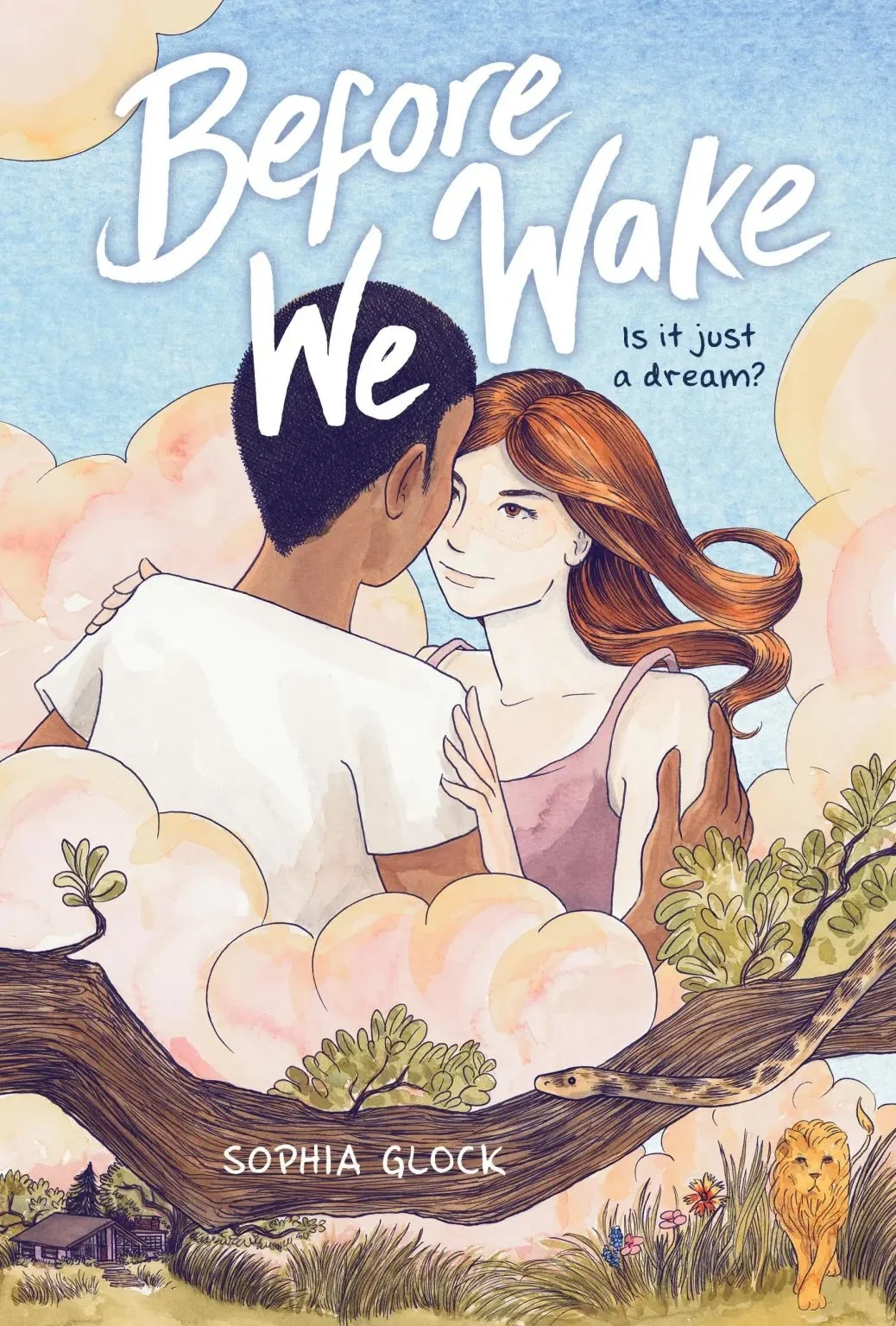
BEFORE WE WAKE
Sophia Glock (2026)
Before We Wake tackles similar themes as Passport — complex friendships, relationships, loss — But this time through the lens of a teen girl struggling after the death of a parent. Resistant to change, living through the period of life that inevitably invites change the most, Alicia finds herself in a complex love triangle when she starts to see her best friend’s boyfriend in her dreams — except he seems to remember the dreams, too.
I think there’s a moment in every person’s life where you have the realization that nothing can stay the same forever. It can be triggered by something as major as a death, or as mundane as an afternoon at your job. The people you knew the best, suddenly you realize you don’t know at all, and maybe you don’t even know yourself as well as you thought you did. What do you want? What do YOU want? Will you take the next step to make it happen, even if it means accepting uncertainty? Or will you find yourself forever walking towards some vague spot in the distance, never acknowledging….something?
Something that jumped out to me in this book was all the tarot inspired imagery, something Sophia herself told us at the signing was very intentional, and drew a lot from her history with her mother, who was a professional dream interpreter, when running column doing so for a period of years. It’s obvious in some scenarios, like Alicia having her cards read by best friend Marisa; but in other places it is more subtle and open to interpretation — later in the book, in Alicia’s dream world, we see her approached by a lion (which I took to be representing her cat Lucifer) that she is initially afraid of, before remembering she’s in control of her own dreams, and petting the lion. This reminded me a lot of the major arcana card “Strength”, and the “Death” and “The Star” cards both make an appearance. Just something cool that I noticed!
The signing for this book went really well, and Sophia Glock is an extremely rad person. Check this one out if you are into dreamy YA romance!
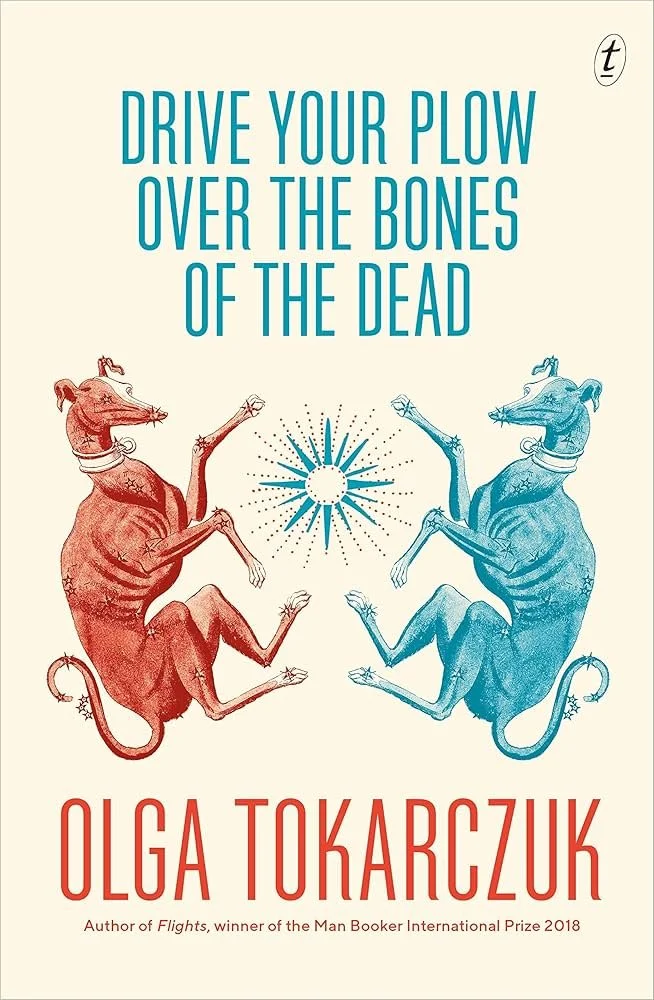
DRIVE YOUR PLOW OVER THE BONES OF THE DEAD
Olga Tokarczuk (2009; 2018)
This is another book that I’ve seen highly recommended online, and last year I read The Empusium from the same author, so I was very excited to dig into this one.
This is a mystery (I’ve seen some describe it as specifically in the noir subgenre although I’m not sure I feel like this applies, in my opinion) that fits squarely into what I’d think of as…. “Old Crone fiction.” Our narrator is an eccentric old woman, living mostly in isolation near the border of Poland and the Czech Republic. Due to her seclusion, as well as her aversion to names and devout belief in astrology and the movements of the heavens, she’s largely viewed as a local crank by what few villagers are around. She’s deeply aware of the natural world around her, you get the feeling that if this woman existed in the 1500s she would have been burned as a witch. Still, she’s managed to make a few friends, including a young man she calls Dizzy with whom she spends time translating the works of William Blake, and a woman she calls Good News who runs a cozy local thrift store.
Prominent men begin to die in mysterious ways around this provincial village, and our narrator (don’t call her Janina!) finds herself drawn into the swirl of intrigue surrounding these deaths.
I won’t spoil anything here, but genuinely I would advise AGAINST looking up any blurbs or reading the back of the book, because the end twist was pretty obvious after doing so.
This book dwells a lot on the relationship between people and animals, and who gets the right to live. I think as a dedicated pet mom myself, a lot of the arguments about animal cruelty and humanity encroaching on nature were a little “well, duh” to me, but I can see this being an incredibly impactful read to someone who is a little less in touch with their communities, both local and natural.
I didn’t love this book as much as The Empusium, but I definitely understand why people love it so much, and I’ll continue keeping an eye out for more works by Tokarczuk!
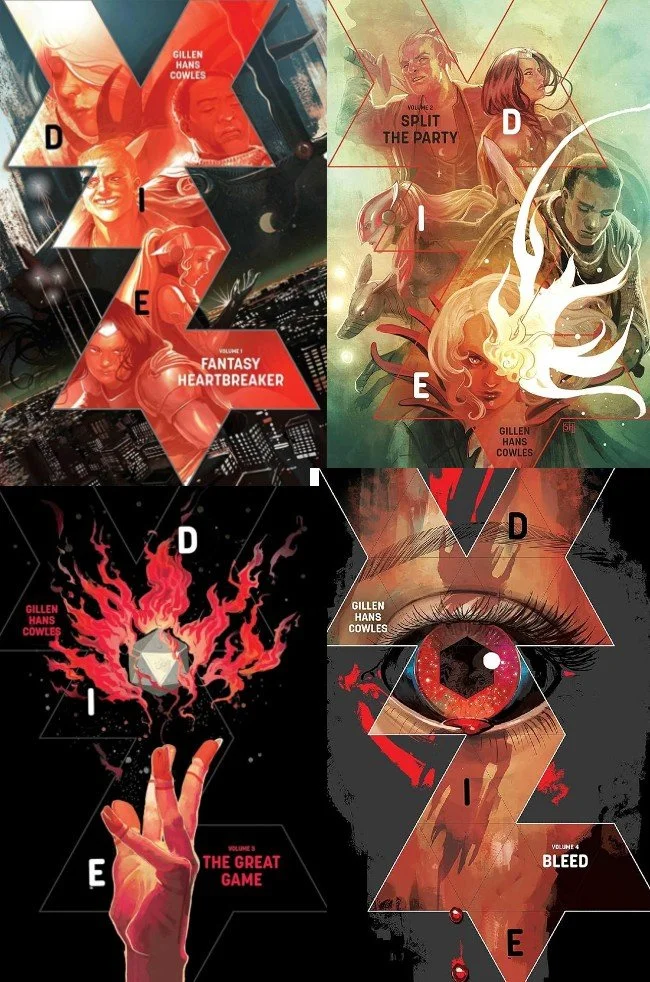
DIE
Kieron Gillen, Stephanie Hans (2019-2021)
Kieron Gillen is one of those comic book writers that I struggle to follow from issue to issue. That’s not a criticism, it’s just a fact (or maybe it's a skill issue on my part, who knows.) I collected this series in single issues, throughout the entire run, and even though I very much enjoyed it, I often found myself struggling to remember facts about what had happened in the previous issue. I’ve had the same problem with his current series, The Power Fantasy — it’s great, but it’s dense, character heavy, and layered with details that if you forget, you’re likely to miss the impact of an interaction or plot point down the line. However, since DIE has restarted with a new series — DIE LOADED, I decided now was the perfect time to reread the whole series.
Spread across four TPBs (trade paperbacks), the full 20 issue run is much more digestible in binge reading sessions. And I can say confidently with this being my SECOND reread of the DIE trades (last having read them roughly five years ago) this series only gets better on subsequent readings.
DIE is complicated — lots of time pretzel stuff, different regions with different inhabitants, different gods with different motivations, and the main characters themselves equally so. The premise is a bit Jumanji-esque, in that in the 90s a group of kids get sucked into a roleplaying game, and go missing in the real world. They reappear two years later, injured, haunted, and literally unable to talk about what happened while they were gone. And that’s the ones that DID reappear. Years later, as adults, the one player who remained in the game reaches out to them, calling them back to the world of DIE, and the plot goes on from there. There’s drama, action, suspense, fantasy, horror, and a ton of fun literary references for any fan of the classics. But by the end of the story, the main question — “What am I for,” asked by an amoral being — really asks us, the reader, what fiction, and fantasy fiction in particular is for — how do we use it, what do we take away from it, how does it change us?
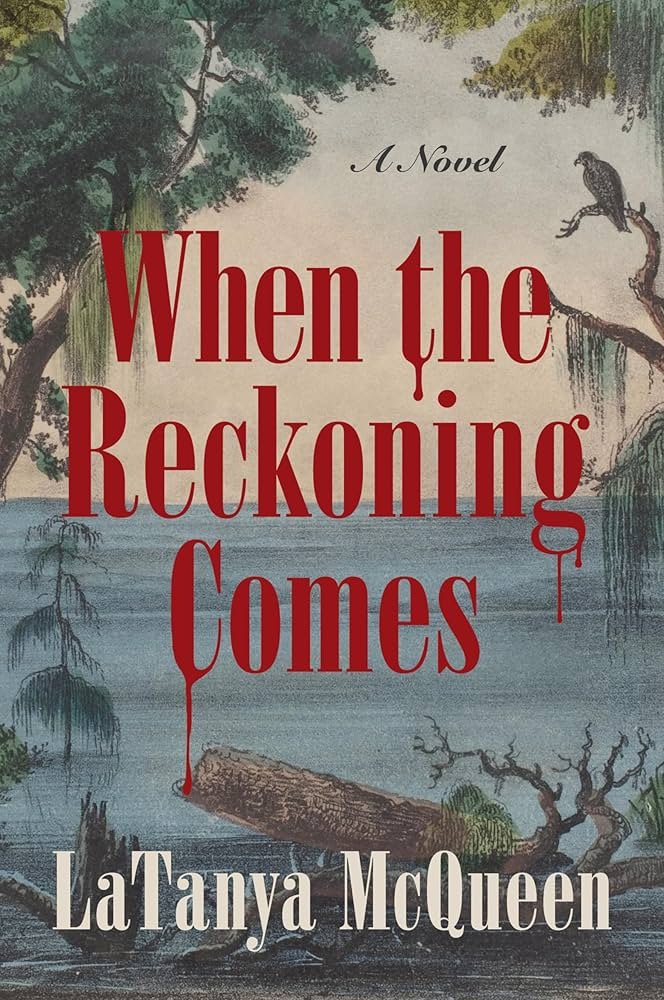
WHEN THE RECKONING COMES
LaTanya McQueen (2021)
Set in a fictional North Carolina town, When The Reckoning Comes follows a Black woman named Mira, who returns to her hometown to attend her former best friend’s wedding which is, unfortunately, on a former plantation, remodeled into a tourist attraction, and the site of a childhood horror Mira has been running from her whole life.
The Woodsman Plantation, long abandoned by the time of Mira’s teen years, stood as a decrepit relic on the outskirts of town, a silent reminder of a painful history of racism and slavery whose effects can still be seen in the segregated town’s social and economic climate. It was a scene of a traumatic experience for both herself and her friend Jesse; Mira saw something she couldn’t explain and spent years grappling with, and Jesse was accused of a nearby murder based on nothing but his Blackness alone. However, in the present day, the Plantation has been cleaned up and made palatable to the masses, presenting a vision of the past not as it was, but how we would prefer that it had been. At the same time, it continues perpetuating the inequalities of its time, with all the service and hospitality workers comprised of the already economically disenfranchised Black citizens of the town, forced to take the new work the Plantation and all its tourism is bringing to the local economy.
Amid this climate, former friends Mira, Jesse, and Celine reunite for Celine’s wedding. Celine, coming from poverty, is desperate to show off her triumph at marrying a rich and powerful man, finally achieving the status she always felt entitled to. Mira is there out of guilt, hoping to reconnect with Jesse and Celine, if she even can after the years apart and changes they’ve undergone, despite her discomfort at returning to a place that’s haunted her for years. Jesse is there with his own motives, which play out later in the book.
Amid this backdrop, the ghosts of the Woodsman Plantation await, to show us the truth of the history we would rather forget.
In my opinion, this book was at its best when the ghosts, and the visions they are showing Mira, are ratcheted up to eleven, and you realize that the lines between reality and illusion, the past and present, are blurring, which kept me guessing what was next and also actually surprised me at one point near the conclusion of the book. A good southern ghost story!
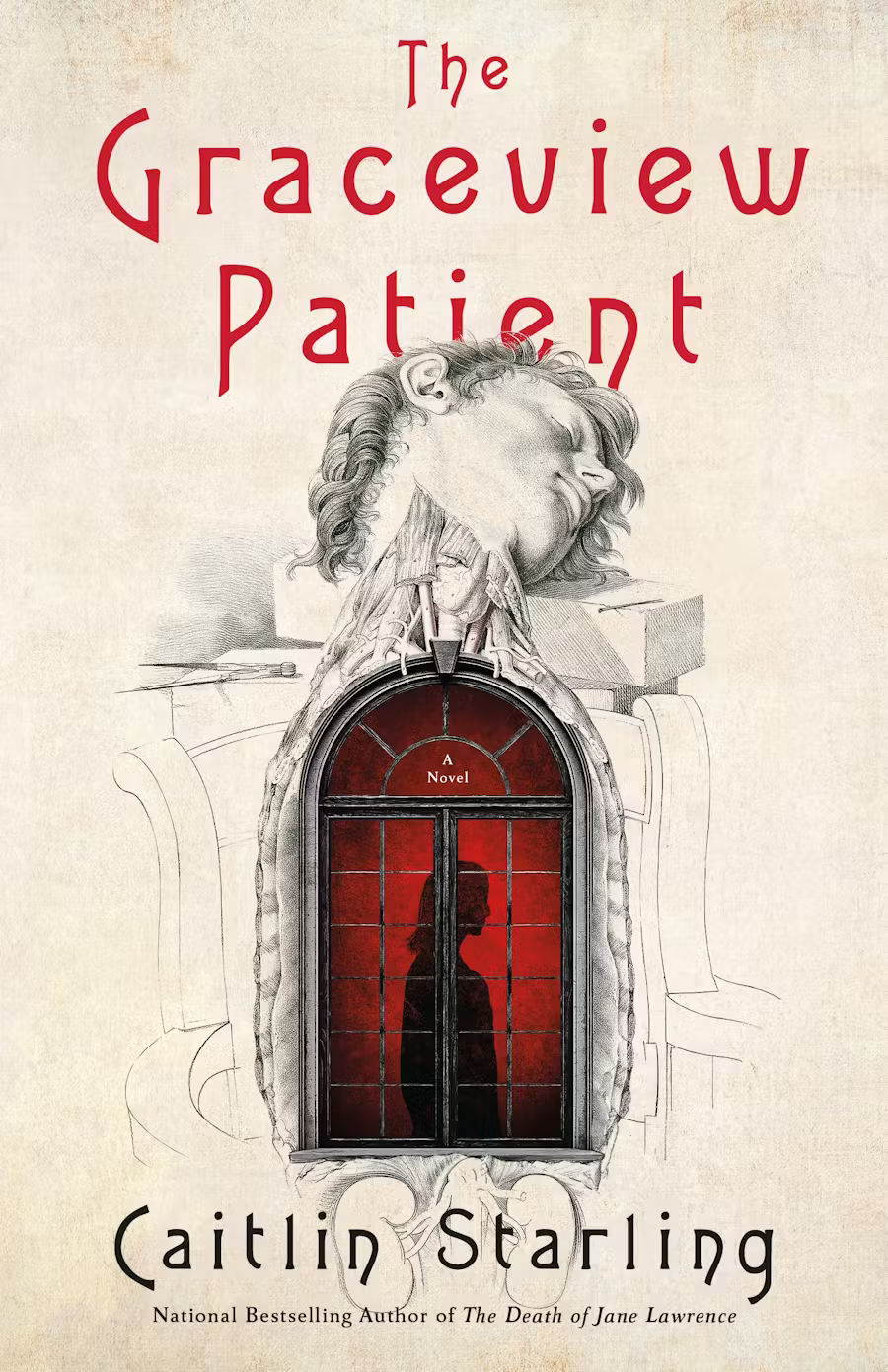
THE GRACEVIEW PATIENT
Caitlin Starling (2025)
This one was a Valentine’s Day gift from my partner; the fastest way to my heart is through a good book of course.
The synopsis of this book can be summed up as: woman with a rare immunodeficiency signs up for an experimental clinical trial, and things go awry.
This book really leans into the question of what’s really happening vs. what is a medically induced hallucination, which I really enjoyed — This is something that was present in another of Caitlin Starling’s books that I like, The Death of Jane Lawrence; although that was definitively more gothic horror, where this is certainly medical.
It really was fascinating to me; I have a close friend that’s gone through a lot of extreme medical stuff throughout her life, and a lot of the procedures and experiences our man character, Meg, is going through rang very true to what my friend has described to me, and I recognized a lot of the technical terminology. The emotional aspect of Meg’s journey, too, felt very powerful; how she experienced isolation at varying degrees, both because of her illness as well as due to her hospital stay, and the longing she feels for human connection.
The only other horror novel that I’ve read that I really feel like falls into the “medical horror” genre (if that’s even a thing) is Parasite Eve by Hideaki Sena, although most folks are probably more aware of the video game sequel from the 90s. While these books are very different, I caught echoes of Parasite Eve, especially towards the end of the book. The Graceview Patient is claustrophobic body horror, not for the squeamish.
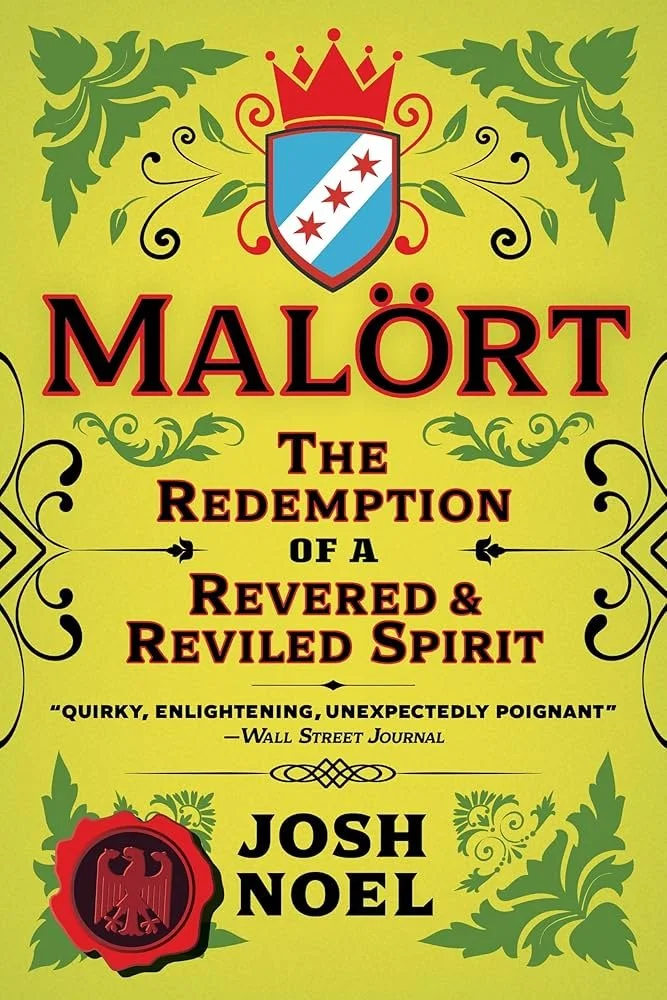
MALORT: THE REDEMPTION OF A REVERED AND REVILED SPIRIT
Josh Noel (2024)
I have a fascination with Chicago. I think it’s been there since I was a kid, first getting into comics and especially as a Batman fan, when parts of the Nolan Batman films were being based on or filmed in Chicago. As I got older and developed more interests, it expanded into the city’s broader history, from the 1893 World’s Fair to the wide and varied types of architecture on display. My partner and I visited Chicago for the first time this past October for our wedding anniversary, which is where I tried Malört for the first time, and like many others before me, I became enchanted with this weird drink.
My partner read this book before I did, and passed it along to me. This was such a fascinating look at the personal histories of both the people behind the liquor and the brand, but also drinking and cocktail culture. As someone who already considers themselves a fan of Malört, this was an enlightening and honestly kind of inspiring read. There were so many things stacked against this drink, and the company, and so many times along the way that Jeppson’s Malört could have ceased to be, yet against the odds, like every good underdog story, Malört continues to thrive and survive.
Thanks for checking out my February wrap-up! I definitely found some new favorite books this month, that I know I will revisit for years to come, which is always my favorite feeling.
—M.